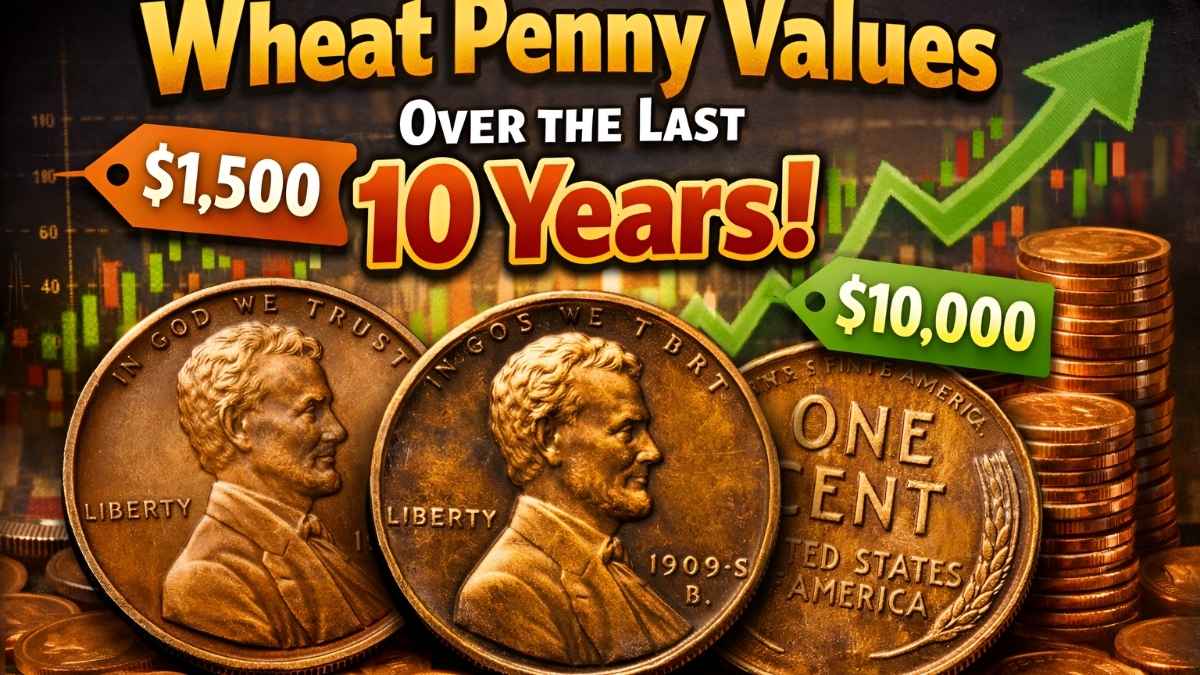
Wheat Penny Values Over the Last 10 Years: The Lincoln Wheat Penny, minted from 1909 to 1958, remains one of the most iconic coins in American numismatics. Featuring Abraham Lincoln on the obverse and two wheat stalks on the reverse, it was the first U.S. coin to honor a real person. While once common in circulation, Wheat Pennies have become prized collectibles, with certain dates and varieties commanding values far beyond their face value. Over the past decade, their market has experienced notable shifts, reflecting both collector demand and broader economic trends.
Steady Growth in Common Dates
For most Wheat Pennies, values have shown steady appreciation over the last ten years. Common dates from the 1940s and 1950s, once worth only a few cents above face value, now often sell for several dollars in uncirculated condition. This growth reflects increased interest from new collectors entering the hobby, as well as the rising popularity of building complete sets. The accessibility of these coins makes them attractive entry points, and their gradual rise in value demonstrates the strength of long-term collecting.
Surging Prices for Key Dates
Key dates such as the 1909 S VDB, 1914 D, and 1922 No D have seen significant price increases. In 2016, a high-grade 1909 S VDB might have sold for around $1,500, but by 2026, prices for mint state examples often exceed $3,000. Similarly, the 1914 D penny has doubled in value over the past decade, with pristine specimens reaching well above $50,000. These surges highlight the enduring demand for coins that are both historically significant and difficult to find in top condition.
The Role of Error Coins
Error varieties such as the 1955 doubled die and the 1943 copper penny have continued to dominate headlines. Over the last ten years, auction records for these coins have repeatedly broken expectations. The 1955 doubled die, famous for its dramatic doubling on “LIBERTY” and “IN GOD WE TRUST,” has seen values climb from around $25,000 in 2016 to over $50,000 in 2026 for mint state examples. The 1943 copper penny, one of the most famous minting errors, has sold for hundreds of thousands, cementing its place as a legendary rarity.
Influence of Market Trends
The broader coin market has influenced Wheat Penny values. Economic uncertainty and inflation have driven investors toward tangible assets, including rare coins. As a result, demand for Wheat Pennies has grown, particularly for high-grade and certified examples. Auction houses report increased participation from international buyers, further boosting prices. This global interest has helped sustain upward momentum in values, even for mid-range coins.
Collector Insights
Seasoned collectors note that the last decade has been marked by a shift toward quality over quantity. While bulk lots of circulated Wheat Pennies remain popular, serious buyers are focusing on certified coins with strong eye appeal. Coins graded by professional services such as PCGS or NGC consistently outperform raw examples, underscoring the importance of authentication and condition. Collectors also emphasize the growing role of online marketplaces, which have expanded access to rare coins and increased competition among buyers.

Value Trends by Decade
- 1909–1920s: Early Wheat Pennies have seen the strongest growth, with rare dates doubling or tripling in value.
- 1930s–1940s: Mid-century coins have appreciated steadily, with error varieties leading the way.
- 1950s: Later Wheat Pennies remain affordable but have shown gradual increases, especially in uncirculated grades.
Auction Highlights
Over the past ten years, several Wheat Pennies have made headlines at major auctions. A 1943 copper penny sold for over $1 million, while a 1955 doubled die in pristine condition fetched more than $60,000. These record-breaking sales have fueled interest in the series, encouraging collectors to search their own collections for hidden treasures.
The Future Outlook
Looking ahead to 2026 and beyond, Wheat Penny values are expected to remain strong. As younger generations enter the hobby, demand for accessible yet historically significant coins will continue to grow. Key dates and error varieties will likely see further appreciation, while common dates will remain popular entry points. The combination of history, rarity, and collector enthusiasm ensures that Wheat Pennies will remain a cornerstone of American numismatics.

Conclusion
The last decade has been transformative for Wheat Penny values. From steady growth in common dates to surging prices for key rarities, the market has reflected both economic trends and collector passion. Error coins have continued to capture headlines, while certified examples have set new standards for value. For collectors in 2026, Wheat Pennies represent not only a link to America’s past but also a rewarding investment in the future of numismatics.