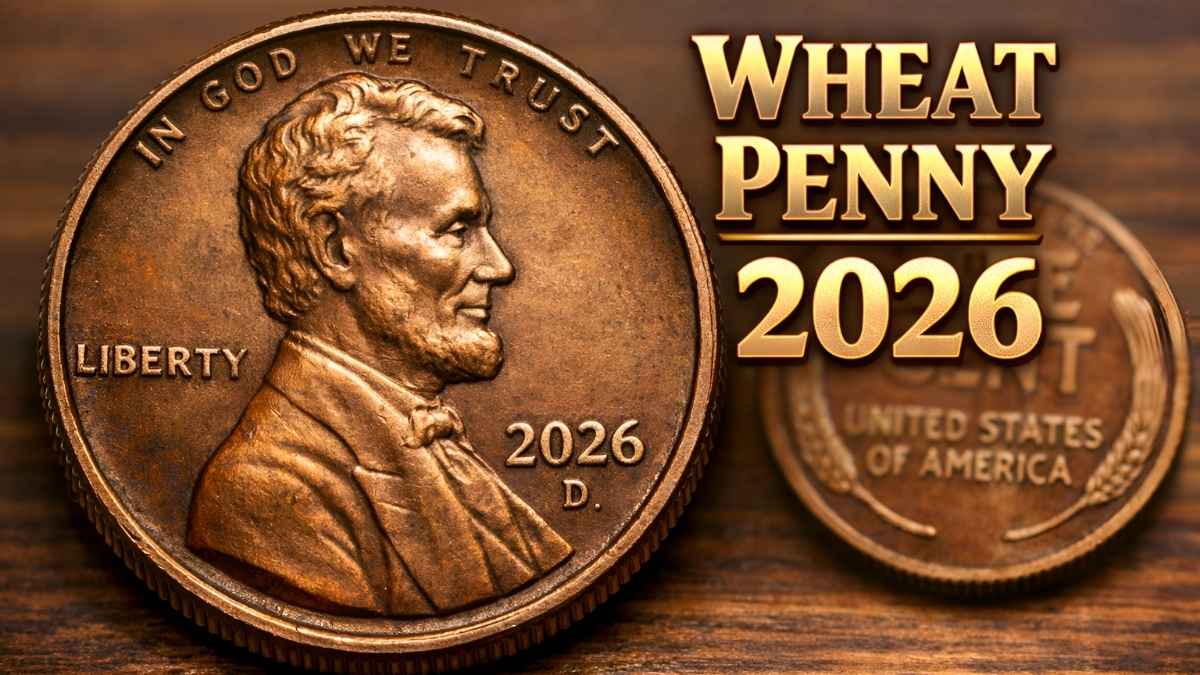
Wheat Penny 2026: The Wheat Penny, minted from 1909 to 1958, remains one of the most iconic coins in American numismatics. Its design featuring Abraham Lincoln on the obverse and two wheat stalks on the reverse has fascinated collectors for generations. In 2026, certain Wheat Pennies continue to command extraordinary prices, with some rare examples valued at over $100,000. This guide explores the history, rarity, and value of Wheat Pennies, offering insights for collectors who dream of uncovering hidden treasures.
Historical Background
The Wheat Penny was introduced to commemorate Abraham Lincoln’s 100th birthday. Designed by Victor David Brenner, it became the first U.S. coin to feature a president’s portrait. Minted for nearly fifty years, the Wheat Penny witnessed decades of American history, from the Great Depression to World War II. Its longevity and cultural significance make it a cornerstone of coin collecting.

Key Dates and Rarities
Certain Wheat Pennies stand out due to their rarity and value. Collectors in 2026 continue to prize these key dates:
- 1909-S VDB: The most famous Wheat Penny, produced in limited numbers at the San Francisco Mint. High-grade examples can exceed $100,000.
- 1914-D: Known for its scarcity, especially in mint condition. Values often reach tens of thousands, with pristine coins surpassing six figures.
- 1922 No D: A variety struck in Denver without the mint mark, making it a rare and valuable error.
- 1931-S: Low mintage and high demand make this coin a prized addition to collections.
- 1943 Copper Penny: Accidentally struck on copper planchets instead of steel during wartime, this coin is legendary, with values exceeding $100,000.
These coins represent the pinnacle of Wheat Penny collecting, combining rarity with historical intrigue.
Minting Errors
Errors add another layer of excitement to Wheat Penny collecting. Examples include doubled dies, off-center strikes, and repunched mint marks. The 1955 doubled die penny is one of the most famous error coins, with its dramatic doubling on the obverse making it instantly recognizable. High-grade examples of this error can command values well into the six-figure range.
Collectors in 2026 remain vigilant for error coins, knowing that even small anomalies can transform a common penny into a rare collectible.

Condition and Grading
The value of a Wheat Penny depends heavily on its condition. Coins are graded on a scale from Poor (P-1) to Mint State (MS-70). High-grade coins with sharp details and minimal wear are worth significantly more than circulated examples. Professional grading services provide authentication and standardized evaluations, ensuring that collectors can buy and sell with confidence.
For rare dates and errors, condition can mean the difference between a coin worth a few thousand and one worth over $100,000.
Everyday Discoveries
One of the most appealing aspects of Wheat Pennies is the possibility of finding them in everyday life. While rare, it is not unheard of for collectors to discover Wheat Pennies in old jars, inherited collections, or even pocket change. These stories inspire new enthusiasts, proving that valuable coins can still be found outside of auctions and dealer inventories.
Investment Potential
Wheat Pennies are not only collectibles but also investments. Rare dates and error coins have consistently appreciated in value over time. In 2026, the market remains strong, with demand driven by both hobbyists and investors seeking alternative assets. Coins with unique features or exceptional condition are particularly attractive, often selling for impressive sums at auctions.

Tips for Collectors
For those interested in Wheat Pennies, several tips can enhance the collecting experience:
- Focus on quality over quantity, prioritizing coins in the best possible condition
- Learn to recognize common errors and varieties, as these can significantly increase value
- Preserve coins in protective holders to maintain condition
- Consider professional grading services to authenticate and evaluate rare finds
- Stay informed about market trends and auction results to understand current values
By following these practices, collectors can build a collection that is both enjoyable and potentially profitable.

Conclusion
The Wheat Penny remains a cornerstone of American numismatics, and 2026 offers exciting opportunities for collectors. Rare dates, minting errors, and high-grade examples continue to capture attention, with some coins worth over $100,000. Whether driven by passion for history, appreciation of artistry, or pursuit of investment, collectors will find that Wheat Pennies offer endless opportunities for discovery.