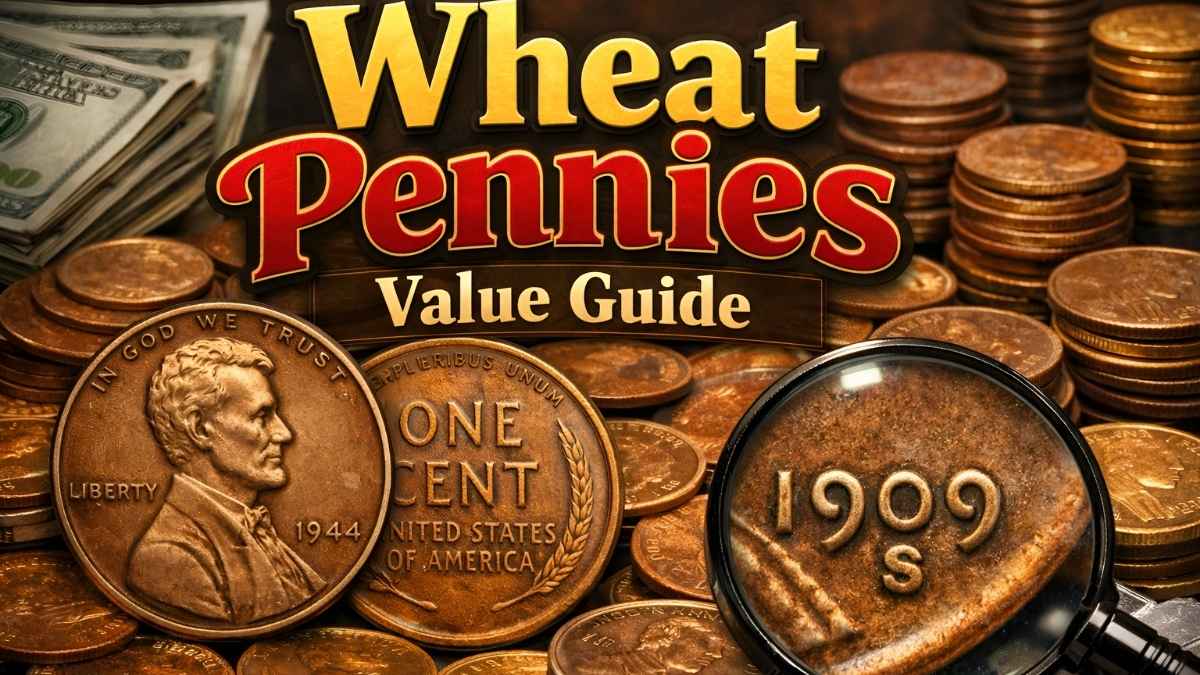
Wheat Pennies Value Guide: Wheat pennies, minted between 1909 and 1958, are among the most collected coins in American numismatics. Their simple yet iconic design featuring Abraham Lincoln on the obverse and two wheat stalks on the reverse has made them a favorite for generations. While many wheat pennies remain affordable, rare dates and error varieties have seen dramatic increases in value. Comparing prices today with those from a decade ago reveals how collector demand and market trends have reshaped their worth.
Historical Significance
The wheat penny was introduced in 1909 to celebrate the centennial of Abraham Lincoln’s birth. It was the first U.S. coin to feature a real person rather than a symbolic figure. Over the years, changes in minting practices, metal shortages, and design adjustments created varieties that are now highly prized.

Key Rare Wheat Pennies
- 1909-S VDB: The first-year issue with designer Victor David Brenner’s initials prominently displayed.
- 1914-D: A low-mintage coin from the Denver Mint, scarce in high grades.
- 1922 No D: Produced without a mint mark due to worn dies, making it a rare variety.
- 1931-S: One of the lowest mintage wheat pennies, highly collectible.
- 1955 Double Die: Famous for its dramatic doubling of the date and lettering.
Price Trends Over the Last Decade
| Coin Variety | Average Value in 2016 | Average Value in 2026 | Trend |
|---|---|---|---|
| 1909-S VDB | $1,000 – $2,500 | $2,500 – $5,000 | Strong increase |
| 1914-D | $500 – $1,200 | $1,500 – $3,500 | Significant growth |
| 1922 No D | $700 – $2,000 | $2,000 – $4,500 | Upward trend |
| 1931-S | $75 – $150 | $200 – $400 | Moderate rise |
| 1955 Double Die | $1,000 – $2,500 | $3,000 – $6,000 | Substantial appreciation |
| Common Wheat Pennies (circulated) | $0.10 – $0.50 | $0.25 – $1.00 | Modest growth |
Observations
- Rare dates have more than doubled in value, showing strong investment potential.
- Error coins like the 1955 double die have surged in popularity, driving prices higher.
- Common circulated wheat pennies remain affordable, making them accessible for beginners.
- Professional grading has become more important, with certified coins commanding premiums.
Collector Insights
- Rare wheat pennies are excellent long-term investments due to steady appreciation.
- Even modest collections can contain hidden gems if coins are preserved well.
- Online auctions and marketplaces have expanded access, increasing competition and driving prices upward.
Conclusion
The wheat penny market has evolved significantly over the past decade. While common coins remain affordable, rare dates and error varieties have seen dramatic increases in value. Collectors today benefit from greater access to auctions and grading services, but competition has intensified. Wheat pennies continue to represent both history and opportunity, proving that even the smallest denomination can hold extraordinary worth.