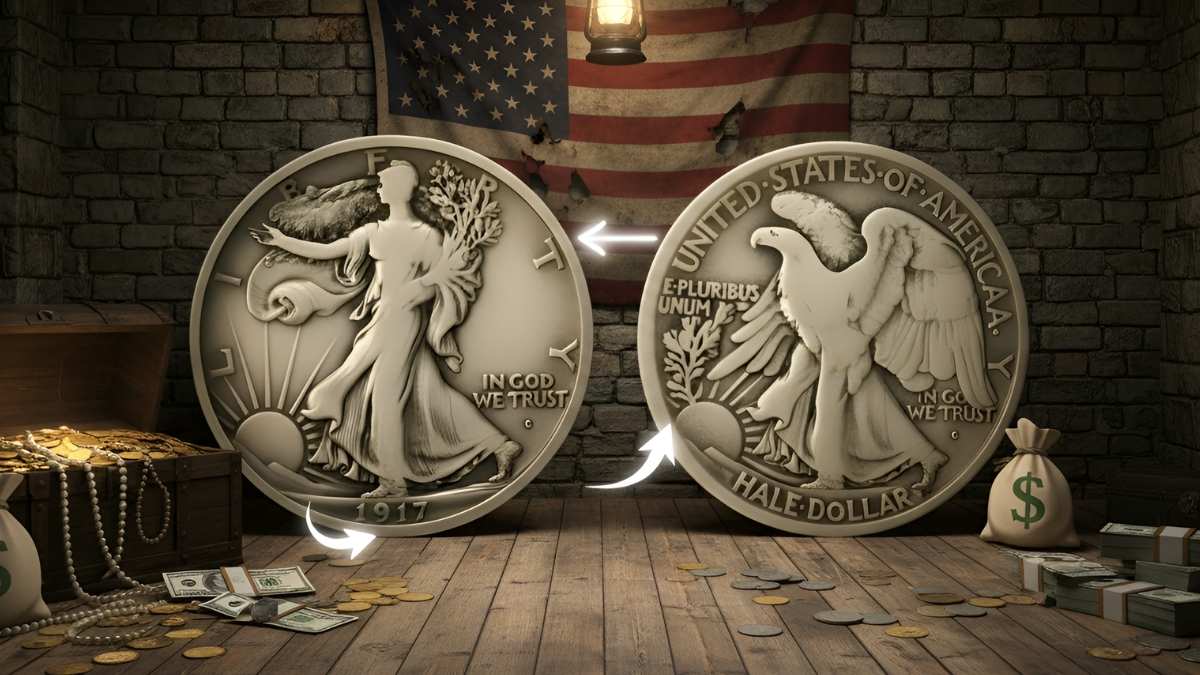
1917 Walking Liberty Half Dollar Prices: The Walking Liberty Half Dollar is one of the most admired coins in American numismatics. Designed by Adolph A. Weinman and minted from 1916 to 1947, it is celebrated for its artistry and historical significance. The 1917 issue is particularly important because it was struck at multiple mints and exists in several varieties, some of which are highly prized by collectors today. This guide explores the values, varieties, and factors that influence the price of the 1917 Walking Liberty Half Dollar.
Historical Background
Introduced in 1916, the Walking Liberty design was part of a broader effort to beautify American coinage. The obverse depicts Lady Liberty striding toward the dawn of a new day, draped in the American flag, while the reverse shows a powerful eagle perched on a rock. In 1917, coins were struck at three mints: Philadelphia (no mint mark), Denver (D), and San Francisco (S). Collectors often seek examples from each mint, with certain varieties commanding premium prices.
Mint Varieties of 1917
The 1917 Walking Liberty Half Dollar exists in several distinct varieties:
- Philadelphia Mint (no mint mark)
- Denver Mint (D) with mint mark on obverse
- Denver Mint (D) with mint mark on reverse
- San Francisco Mint (S) with mint mark on obverse
- San Francisco Mint (S) with mint mark on reverse
The placement of the mint mark is a key factor in rarity and value. Obverse mint mark varieties are scarcer and more desirable.
Value by Condition
The value of a 1917 Walking Liberty Half Dollar depends heavily on condition. Approximate ranges are:
- Good to Very Good (heavily worn, date visible): $15 – $40
- Fine to Very Fine (moderate wear, main details visible): $40 – $120
- Extremely Fine (light wear, strong details): $150 – $500
- About Uncirculated (very light wear, traces of luster): $600 – $2,000
- Mint State (uncirculated, sharp details, full luster): $3,000 – $175,000 depending on variety and grade
Key Varieties and Rarities
Among the 1917 issues, the obverse mint mark varieties from Denver and San Francisco are especially rare. These coins are harder to find in high grades and command significant premiums. Collectors prize them not only for scarcity but also for their historical uniqueness.

Factors That Influence Value
Several factors determine the price of a 1917 Walking Liberty Half Dollar:
- Condition and grade
- Mint mark placement
- Strike quality and detail sharpness
- Collector demand and market trends
Coins with strong strikes, minimal wear, and obverse mint marks are the most valuable.
Collecting Tips
For collectors interested in acquiring a 1917 Walking Liberty Half Dollar:
- Focus on coins with clear details and minimal wear.
- Consider certified coins graded by professional services for authenticity.
- Pay attention to mint mark placement, as obverse varieties are rarer.
- Preserve coins in protective holders to maintain condition and value.
Conclusion
The 1917 Walking Liberty Half Dollar is a coin that combines beauty, history, and rarity. While worn examples are accessible to most collectors, high-grade specimens can reach extraordinary values. Whether building a complete set or seeking a standout piece, the 1917 issue offers both affordability and investment potential. Its enduring appeal ensures it remains a cornerstone of American coin collecting for years to come.